Texas has four driver’s license classes: A, B, C, and M. Most drivers hold a Class C driver’s license, while Classes A and B are available in commercial and non-commercial forms.
Class A vs. Class B vs. Class C
Weight determines the license class. A Class A driver’s license applies to certain vehicle combinations rated at 26,001 pounds or more when the towed vehicle exceeds 10,000 pounds. A Class B driver’s license covers a single vehicle over 26,000 pounds, that vehicle towing 10,000 pounds or less, and buses designed for 24 or more passengers.
These classes come in non-commercial versions for people hauling personal property, like a large fifth-wheel or a stock trailer. Requirements track the Class C list with one addition: the skills test happens in a vehicle representative of the Class you want, so anyone testing for non-commercial Class A brings the actual combination to the appointment.
What a Class C Driver’s License Covers
Cars, pickups, minivans, and most SUVs fall under Class C. This class covers vehicles or combinations below the Class A or B weight limits, plus vehicles under 26,001 pounds towing farm trailers rated at 20,000 pounds or less.
Getting one takes proof of identity, a Social Security number, residency, and lawful presence, followed by a vision screening, a written test, and a road test. First-time applicants between 18 and 24 add a six-hour adult driver education course.
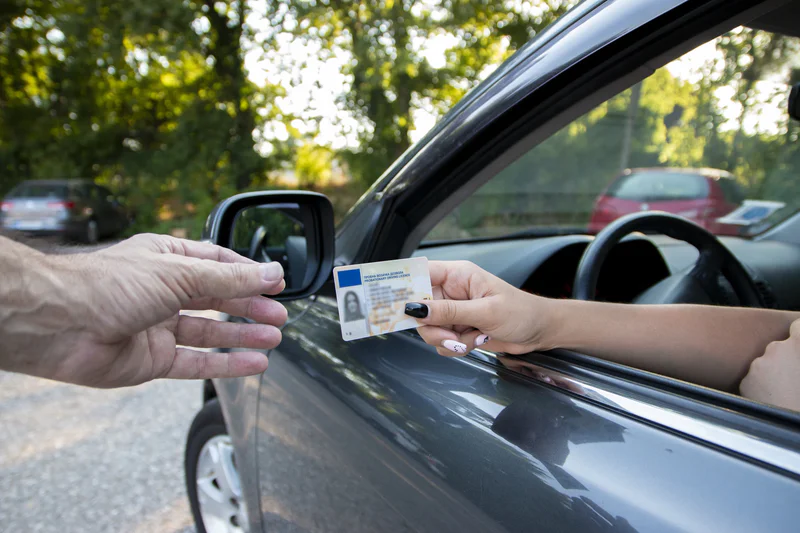
Your driver’s license class sits in a labeled field on the card, and since nearly every private driver in the state carries a Class C, it is the license involved in most everyday motor vehicle accidents.
What Is a CDL, and What Do Class A, B, and C CDLs Cover?
A commercial driver’s license (CDL) is required to operate certain 18-wheeler trucks and other vehicles. Class A covers heavy combinations. Class B covers heavy straight vehicles and large buses. Class C covers smaller vehicles carrying 16 to 23 people or placarded hazardous materials.
What Is a Class M License?
Class M is the motorcycle license, and it covers mopeds too. Riding requires a Class M, no matter what else is already on your record, because a heavier license class does not automatically include motorcycle privileges.
Texas requires an approved motorcycle safety course before issuing Class M licenses to help prevent motorcycle accidents. Riders licensed at 15 carry a 250cc engine-size cap until they turn 16, and anyone under 18 needs parental authorization to get a Class M license.
Provisional Driver’s Licenses in Texas
A provisional license is what a driver between 16 and 18 carries after finishing the learner stage. Limits on that license come from Texas Transportation Code § 545.424.
Anyone under 18 is barred from driving between midnight and 5 a.m. except for work, a school activity, or a medical emergency, from carrying more than one passenger under 21 who is not a family member, and from touching a wireless device behind the wheel at all.
Texas Driver’s License Restrictions
Restrictions limit how, when, or what you drive, and they print as letter codes on the front of the card. Restriction A means corrective lenses. Restriction B means a licensed driver 21 or older has to sit in the front seat.
Other limits get added for medical reasons, vision test results, or a driving record. Some stay on the license permanently, and some come off after a retest:
- Daylight hours only
- Maximum speed caps
- No freeway driving
- Automatic transmission only
- Ignition interlock device required
Some restrictions can be removed once a driver demonstrates they no longer need them. A corrective lens restriction, for example, can come off after passing a vision test without glasses or contact lenses. Since the process depends on which restriction is involved, contact your local Texas Department of Public Safety office for specific instructions on removing a particular restriction.
Interlock restrictions follow a conviction, and driving a vehicle without the device is its own offense. Restrictions like that come up constantly in drunk driving cases, where the license record often lines up with what the court order already says.
How to Get a Texas Driver’s License
Every applicant must prove identity. Drivers under 18 also complete driver education, a learner period, and supervised driving. Testing covers vision, traffic laws, and road skills. Bring the following:
- Proof of identity and lawful presence
- Social Security card or number
- Two documents showing residency
- Registration and insurance for the test vehicle
- A completed application
Renewals run on a much shorter list. A change in vision or a new medical condition can still add a restriction that was not there at your last renewal.
Upgrading or Changing Your License Class
Moving from a Class C license to a Class A or B CDL means meeting the additional requirements that come with commercial driving, including a medical certification, a knowledge test specific to the new class, and a skills test in a vehicle representative of that class.
Adding an endorsement, such as for hazardous materials or passenger transport, works the same way. It requires passing an additional knowledge test, and some endorsements call for specialized training on top of that.
Requirements can vary depending on the specific upgrade or endorsement, so contact your local Texas Department of Public Safety office for the exact steps that apply to your situation.
A Crash Does Not Care About Your Driver’s License Class
Adjusters pull license records early, and one restriction or missing endorsement becomes their whole argument about who caused the wreck. Bring the crash report and the license questions to Jones Injury Law Group, where our attorneys put that license record in context instead of letting the adjuster’s version stand alone.
We built this firm to help people who were seriously harmed, not to move volume. Call (713) 714-6519 or contact us online before somebody else builds the story around what your license says.